Our design process began with research on how people interact with wildlife and what makes a feeding system ethical. We used the problems in EcoEye 1.0 as a guide. From there we sketched ideas for a new system that used sensors to control food portions. We built the first prototype with light cardboard, an Arduino, an ultrasonic sensor, a motor, and a small battery pack. We wired each component and tested the distance sensor to make sure it reacted only when an animal was close.
We faced many challenges during the build. The structure was weaker than we expected and the wiring took trial and error. The flap also needed several redesigns before it moved smoothly with the motor. We solved these problems by reinforcing the box, reorganizing the internal layout, and sealing the surface with Flex Seal for weather protection. Adding the QR code created a stronger learning experience and made the project feel complete. Through this work I learned how to prototype with real materials and how to think about nature through a UX lens. I also learned to test small pieces often, stay flexible when things break, and design for real environments instead of ideal ones.
DESIGN PROCESS
-
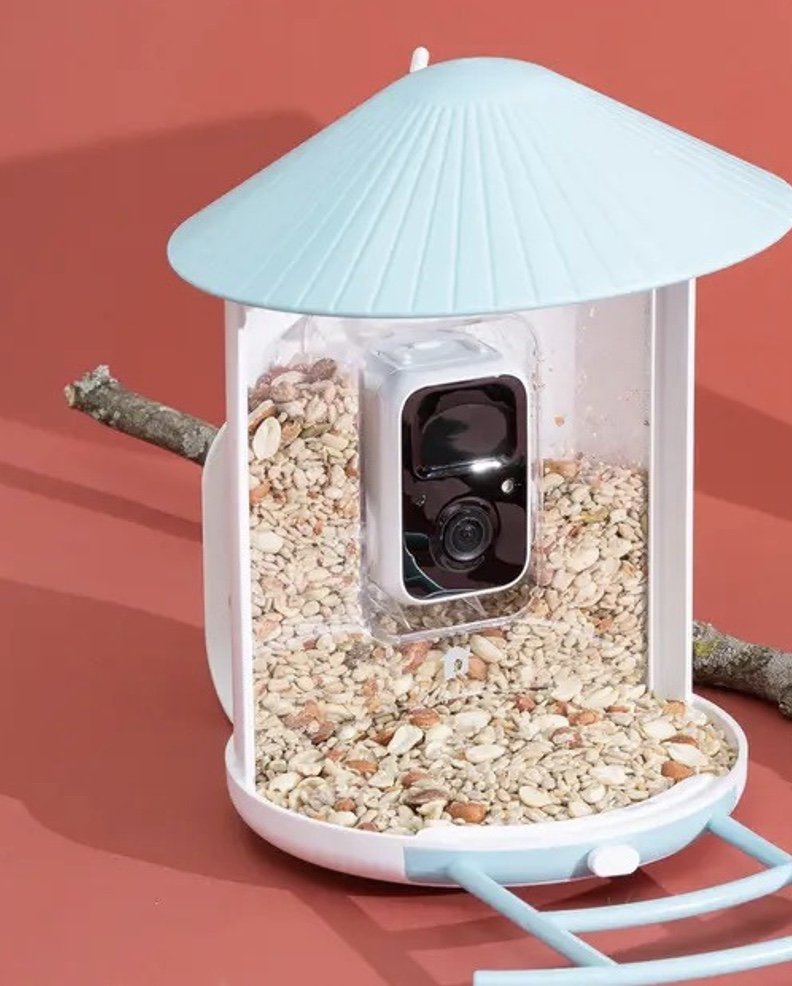
Inspiration
-
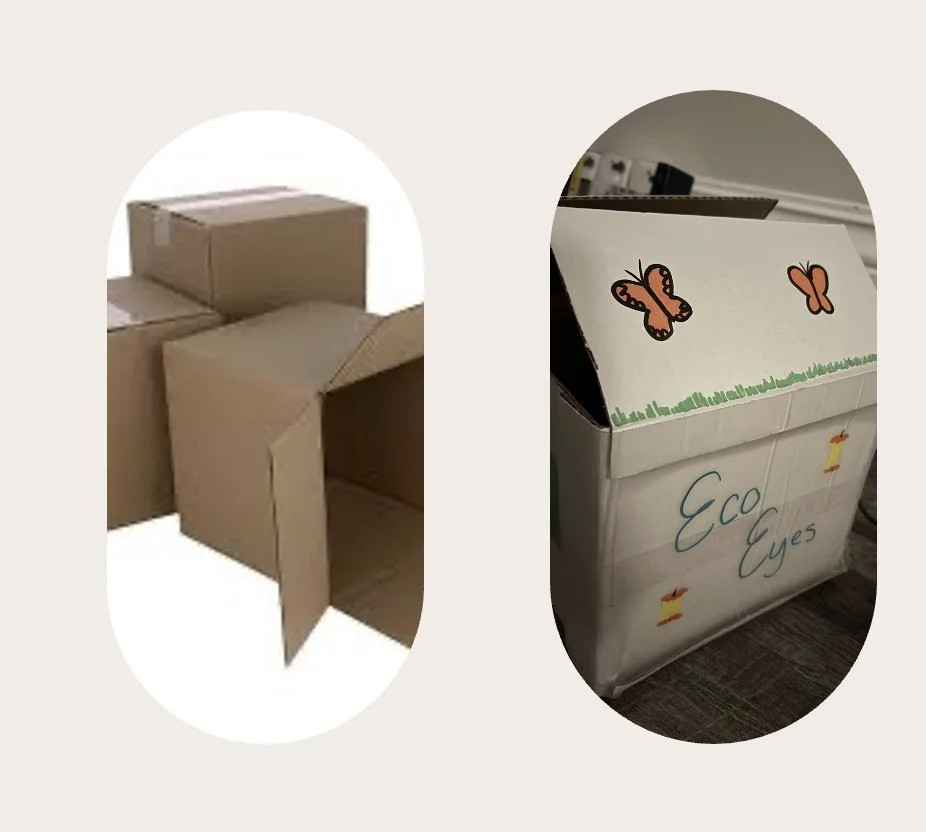
Transformation
-
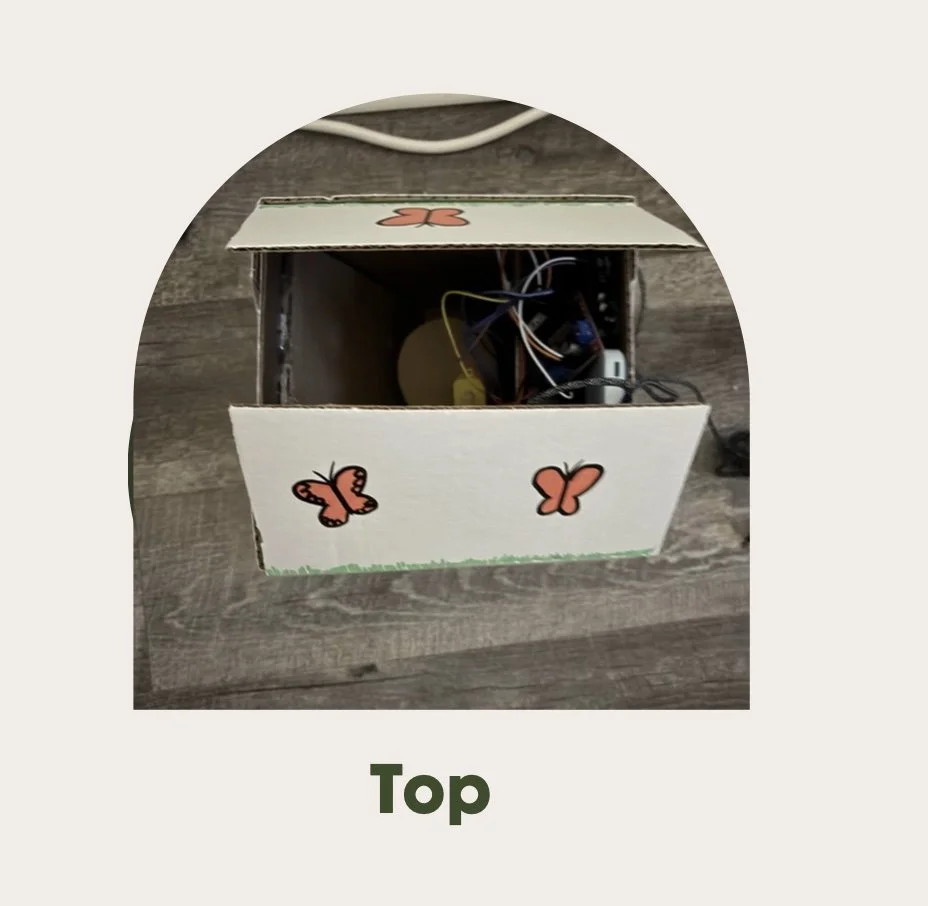
Top View